I’ve taken a break from this blog for a few weeks, so this post has come later than it should. I was lucky to get invited to the national gathering of the Humanity Project, a meeting of dozens of assembly organisers at a conference centre in Staffordshire. Though they have done meet-ups before, I got the impression that this was something bigger and in many ways something new for them.

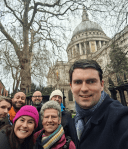
Unfortunately, I’m not in this photo as I missed the opening night.
At a time of so many dark clouds in world history, it was a much-needed uplifting experience, hearing about the good work many organisers were doing in their communities. As one organiser put it:
We are at a crossroads. One path is fear and division. The other is inclusive, joyful, and full of colour. This weekend showed us that we can walk that second path together.
Like Assemble, the Humanity Project is an organisation that seeks to run people’s assemblies, to get people talking and working together to improve their local areas. I have encountered them mainly through a monthly call with assembly organisers to discuss our experiences.
Both groups are offshoots of the Extinction Rebellion activism scene. The Humanity Project differ from Assemble in that they are focusing on reaching working class communities, both white and minority, while Assemble are more openly radical and keener to act fast. The Humanity Project tends to work through existing community groups, whereas Assemble is moving to train and recruit its own organisers. One thing I like about the Humanity Project is the collage-themed artwork that has appeared on their materials and at the gathering. As one of their organisers put it, they want assemblies to be colourful and beautiful.
Perhaps most of us would intuitively choose to act fast, and a disadvantage to working with existing community organisers is that they are often too busy or even reluctant to do something new. But it is important that different groups are trying different approaches to running assemblies and creating an assembly culture. And the challenge of reaching social groups that are often overlooked or even misunderstood needs to be taken seriously. Relations between the two groups are friendly, and some organisers like me work with both.
Perhaps the most useful discovery of the weekend was this short guidebook, one of the best guides I’ve seen to running people’s assemblies and the thinking that goes behind them.
We had some fun activities like drumming and storytelling. A play staged by a Greater Manchester team highlighted the difficulties faced by refugees that, as most people don’t realise, are compounded by uncaring bureaucracy. I spoke to organisers about their work, some in racially divided towns like Luton and Rochdale. But the highlight came when we chose workshops to take part in. It was a hard choice to make, since they were all enticing, but I figured that I needed to brush up on my public speaking skills.
We had a crash course with Alan Finlayson, a professor of political science who specialises in oratory. In the space of a few hours, we had each written out speeches on a subject of our choice and practiced delivering it. Later that night, we delivered it to the rest of the gathering (albeit reading our speeches rather than memorising them).
My chosen subject was “Why you should start a people’s assembly”. Alan arranged for me to go last, figuring out that it was a fitting way to conclude the night. He was right, as became apparent when I ended it by saying with rising passion, “A movement is stirring. JOIN US!”
The feedback I got for my speech was really positive. One woman said to me, “You sounded like a politician that I’d vote for!” Thanks to Alan for making that possible, because a mere six hours earlier it wouldn’t have been so. I’ll put the full text in a future post.
My favourite speech came from a young woman from Birkenhead who had been involved in a successful campaign to save a library. She made an impassioned plea to stop stereotyping the working class as racists, a new version of an old class snobbery. These communities have many people among them like her and Glenn Jenkins, who is featured in the recent The Guardian report below, who can build something so much better.





 Assembly Project
Leave a reply to Power to the People by Danny Sriskandarajah, review and analysis – Assembly Project Cancel reply